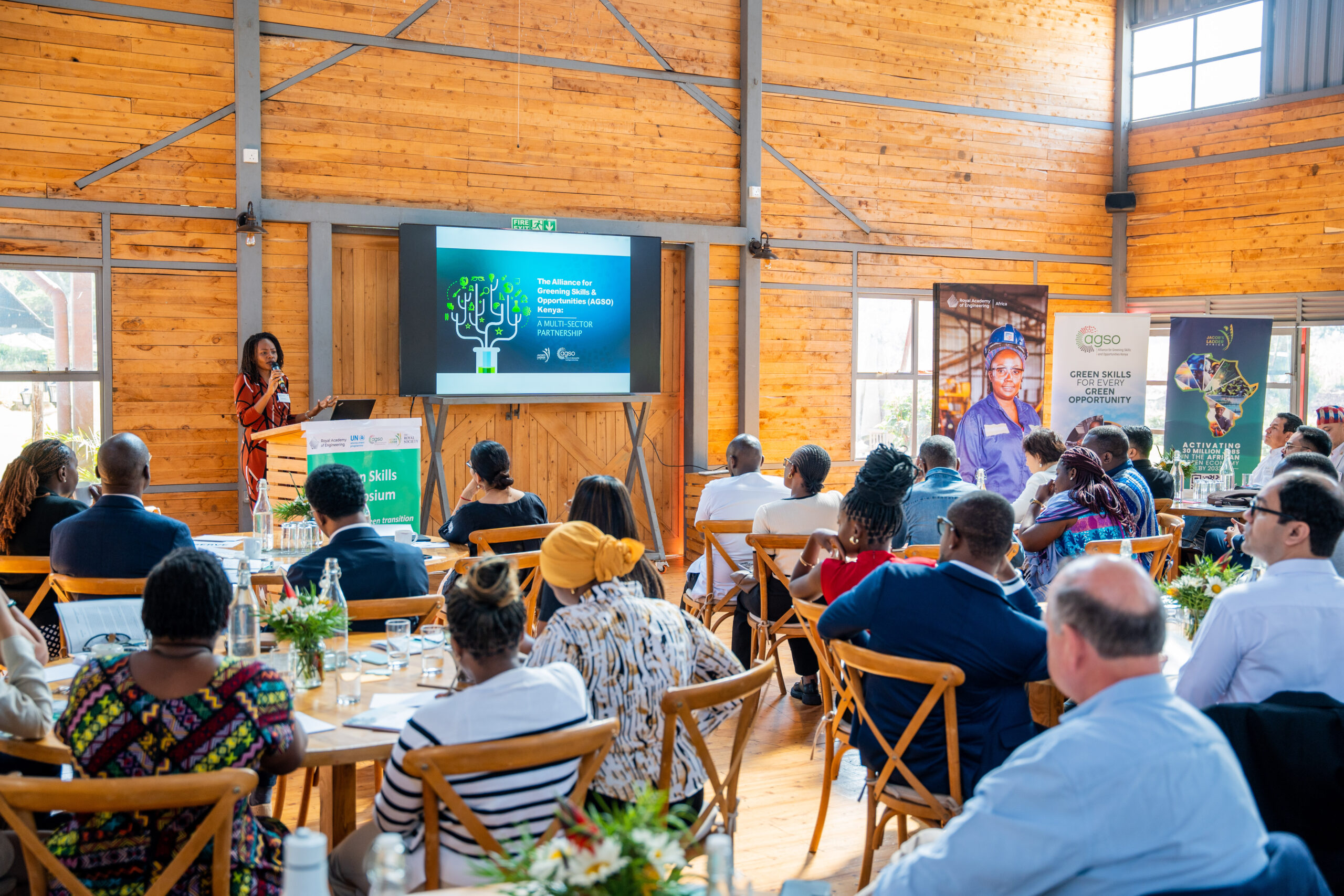
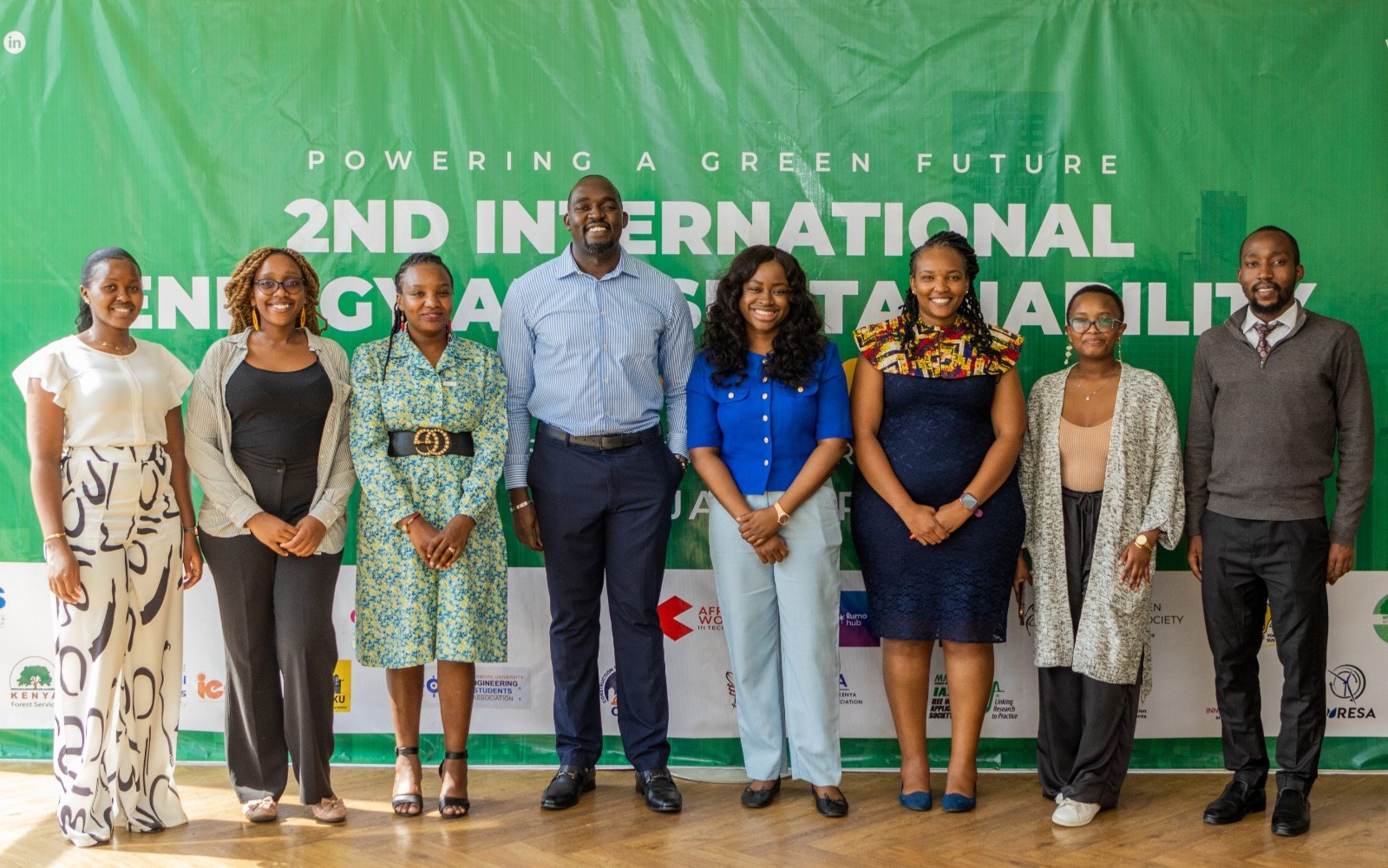
On 28 January 2026, Jacob’s Ladder Africa (JLA) took centre stage at the Second International Energy and Sustainability Summit (IESS 2026), with its Chief Innovation Officer, Karen Chelang’at, delivering a keynote address that challenged participants to reimagine Africa’s green future through execution, skills, and enterprise.
In her keynote, Karen grounded the vision of a green economy in three critical sectors: energy, clean cooking, and smart agriculture, describing them as the backbone of Africa’s transition and the greatest sources of opportunity for jobs and enterprise creation. She underscored energy as foundational, noting that by 2026–2027 Africa will require an additional 20–45 GW of solar capacity. Meeting this demand, she emphasised, will require far more than capital, additionally requiring skilled labour and strong local enterprises, creating significant demand for installers, technicians, construction crews, operators, project managers, and homegrown SMEs.
On clean cooking, Karen highlighted both the urgency and scale of opportunity. Fewer than a quarter of African households currently have access to clean cooking solutions, and according to the International Energy Agency, achieving universal access across sub-Saharan Africa over the next decade will require over 460,000 new workers across the value chain, from manufacturing and distribution to sales and servicing. She also spotlighted smart agriculture, noting that rising population growth will continue to intensify food demand, making climate-smart, productivity-enhancing agricultural systems indispensable to Africa’s green transition.
Addressing young innovators directly, she issued a clear call to action, saying, “Gain relevant skills beyond your degree because a degree alone is no longer a distinguishing factor. Understand the ecosystem you exist in and position yourself within it by actively participating in programmes, communities, challenges, and volunteer opportunities. And by all means, get things done. Start small, but start now.”
JLA’s engagement at IESS 2026 extended well beyond the keynote. As a Platinum Sponsor, JLA supported the Summit’s broader objective of accelerating sustainable energy and climate solutions, including the kickoff of a three-day innovation hackathon focused on translating ideas into practical, scalable solutions. JLA’s Innovation Programmes Manager, Kevin Okwako, participated as a panellist in the session on Renewable Energy, Electrification, and Clean Power Transition, and continues to support participants as a mentor throughout the hackathon.
During the panel, Kevin reinforced the importance of context-driven approaches, stating, “Kenya and Africa at large have adequate resources. Rather than importing solutions, we should focus on building what works for our contexts.”
JLA’s participation at IESS 2026 reflects the strategic intent of greenlabs®, its green entrepreneurship and innovation platform focused on strengthening the capacity of emerging green enterprises. By linking thought leadership, technical mentorship, and enterprise-focused innovation, greenlabs® is intentionally strengthening the pipeline from clean energy ideas to viable green businesses ensuring that solutions generated in convenings like IESS translate into enterprises, jobs, and lasting impact.
Designed to equip emerging founders with market-relevant skills, mentorship, ecosystem access, and practical support, greenlabs® is enabling Africa’s young innovators not just to imagine the green transition but to build it.
For participants inspired by the Summit and hackathon, greenlabs® offers a clear next step: a platform to deepen skills, test ideas, connect with mentors, and begin building solutions that respond to real market and climate needs.
Innovators, early-stage founders, and aspiring green entrepreneurs are invited to join greenlabs® and begin their journey of learning, building, and creating within Africa’s green economy.