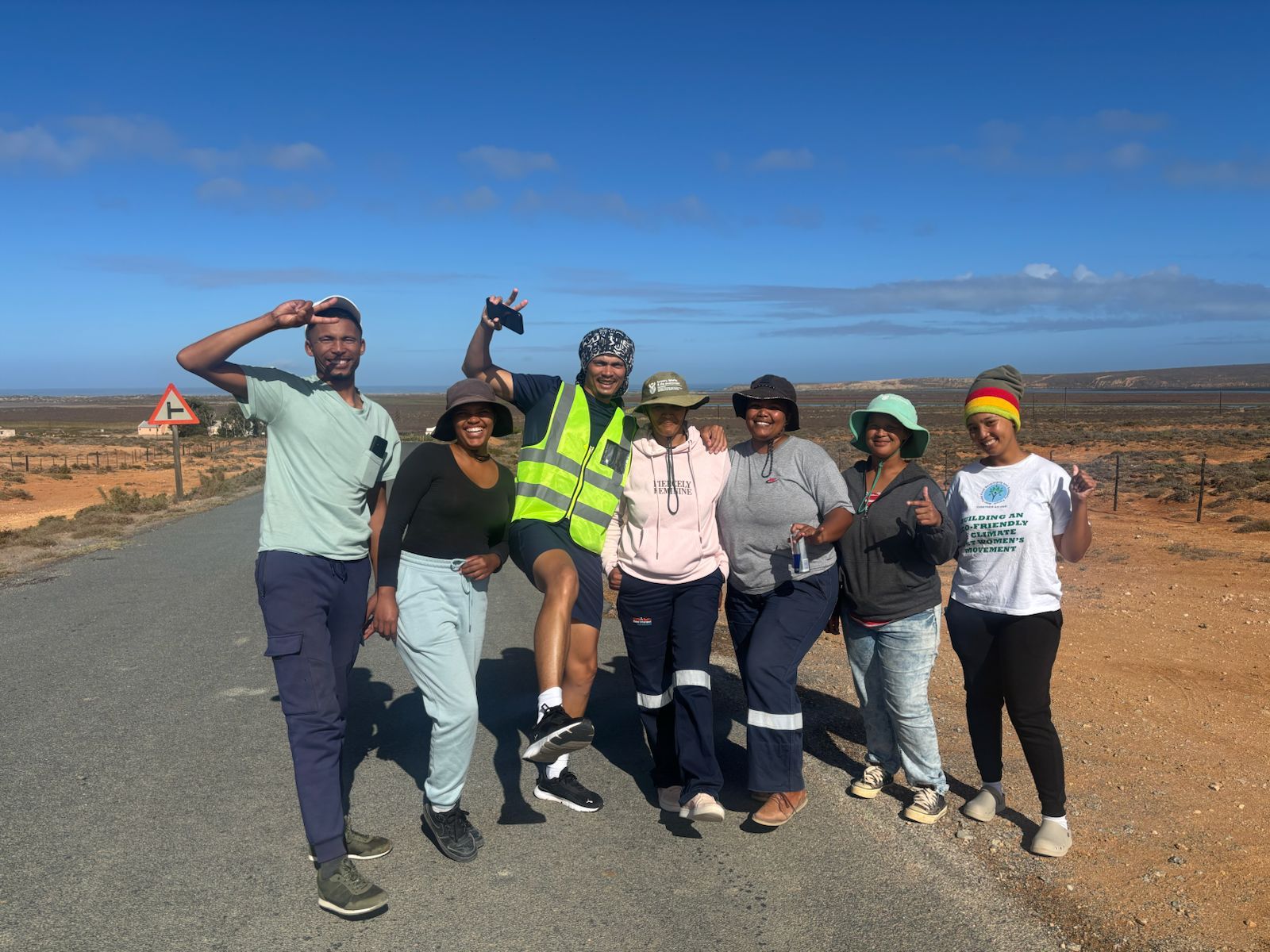
When most people hear about a 200-kilometre walk across 19 towns, their first question is usually a stunned: “Why?”
The answer is simple:, because sometimes the conversations that matter most cannot happen from behind a screen. Across South Africa – and more specifically– in Matzikama, young people continue to face some of the highest unemployment rates in the world. With many of them leaving school without practical exposure to entrepreneurship nor climate adaptation, they continue to face growing challenges linked to climate change, economic inequality and limited access to opportunities. Their first encounter with the green economy is through high-level discussions in policy documents, conference halls filled with climate jargon. Meaning that for most young people, the green economy remains a concept they see as far-fetched.
The Matzikama Green Walk, that took place from March 14th to 21st was designed as a catalyst for awareness, engagement and action around the opportunities presented by the green economy. Its primary purpose was to introduce and simplify the concept of the green economy for communities in the Matzikama region. The walk sought to mobilise young people to begin to actively participate in such conversations. Ultimately the initiative sparked important conversations about the future, creating excitement and momentum around opportunities for young people in sectors such as renewable energy, sustainable agriculture, waste management, tourism and other industries within the green economy.
As the walk moved through different towns, its aim was to raise awareness and funds for Phase Two of the Aquaponics Nethouse Initiative, which is building 60 aquaponics nethouses designed to train, employ youth and feed the community of Matzikama. The Matzikama Green Walk helped create visibility for the project and its potential impact while inviting funders, investors and strategic partners to become part of the journey.
One of the greatest lessons from the journey was that young people are not short of ideas, zeal, ambition, creativity and a genuine desire to contribute to their communities. This reinforced a powerful insight that development is about creating ecosystems that allow people but more especially the youth to participate, contribute and thrive in their different towns.
With that said, no single organisation, municipality, business, school or community group can unlock these opportunities alone. Meaningful impact will require partnerships that bring together all stakeholders, and by strengthening collaboration between communities, the region can share resources, exchange ideas, attract investment and create stronger pathways into the emerging green economy.
As the world moves toward a greener and more sustainable economy, regions that collaborate will be better positioned to attract investment, create jobs, and build resilience. For Matzikama, collaboration is a strategic necessity and the Aquaponics project is a practical example of this approach. While the infrastructure itself can create opportunities for youth development, food production and enterprise development, its long-term success depends on collaboration between technical experts, funders, community leaders, training institutions, local businesses, and youth participants.
Connect with a growing community of young leaders, innovators, entrepreneurs, and changemakers shaping Africa’s future through green enterprise, skills, and inclusive economic transformation – https://chat.whatsapp.com/LkG0zrRpUCo2ayUYjJGuZr?mode=gi_t