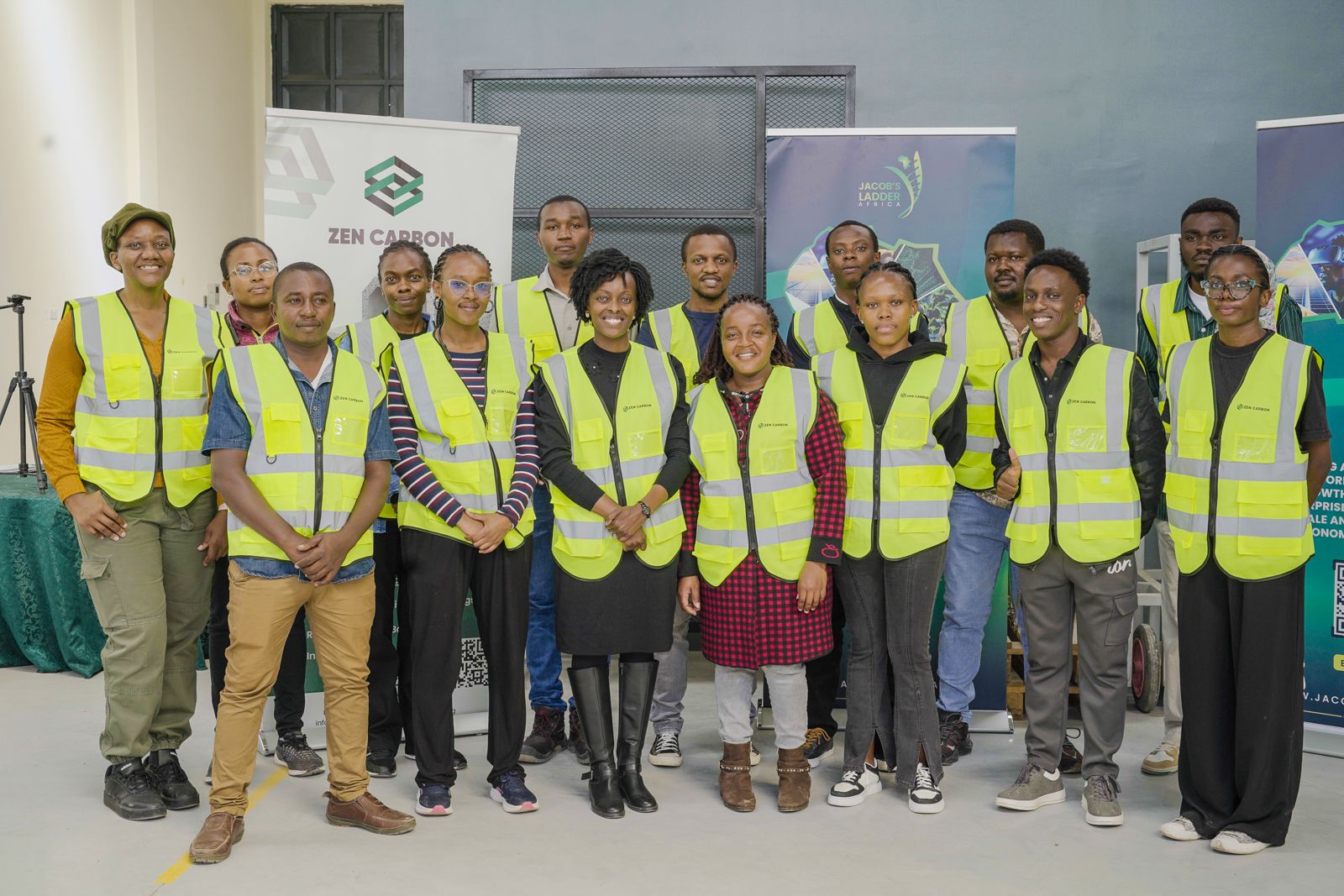
Every year, 12 million young Africans enter a workforce that can accommodate only 3 million of them (Brookings, 2024). Of those who do find work, one in three still live in extreme poverty, because across the continent, only 1 in 10 jobs is formal (Mastercard, 2026). Meanwhile, the green economy is growing at 8% annually, and Africa is projected to unlock 75 million green jobs by 2050 (Dalberg, 2023). The crisis and the opportunity are sitting side by side. What’s missing isn’t jobs-it’s owners.
The Difference Between a Green Job and a Green Enterprise
Let’s be honest about what most “green jobs” look like for young Africans: Seasonal, precarious, and designed by someone else, for someone else’s supply chain. A young woman sorting recyclables in Accra is part of the green economy. But she doesn’t own it. A young man installing solar panels in Kampala is essential to the energy transition. But if the company is headquartered in Amsterdam, so is the profit. There is a fundamental difference between working in the green economy and building it. Between being a resource and being a protagonist.
Green jobs, as currently constructed, are often extractive by design: They slot African youth into the lowest rungs of value chains controlled externally. Green enterprises, by contrast, are rooted. They generate wealth that stays in communities, creates multiplier effects, and, critically, gives young founders something no job can: A stake. The ambition of equitable development must be served by building the next generation of owners.
How You Actually Build an Owner (It’s Not a Workshop)
Here’s what we’ve learned from sitting with young entrepreneurs, in workshop spaces that smell like ambition and ‘chapati dondo’, in university halls where someone’s pitched their idea on a torn flip-chart, in WhatsApp groups that run at midnight because that’s when the founders have time to think: Ownership isn’t a mindset you unlock with a motivational speaker. It’s built in layers.
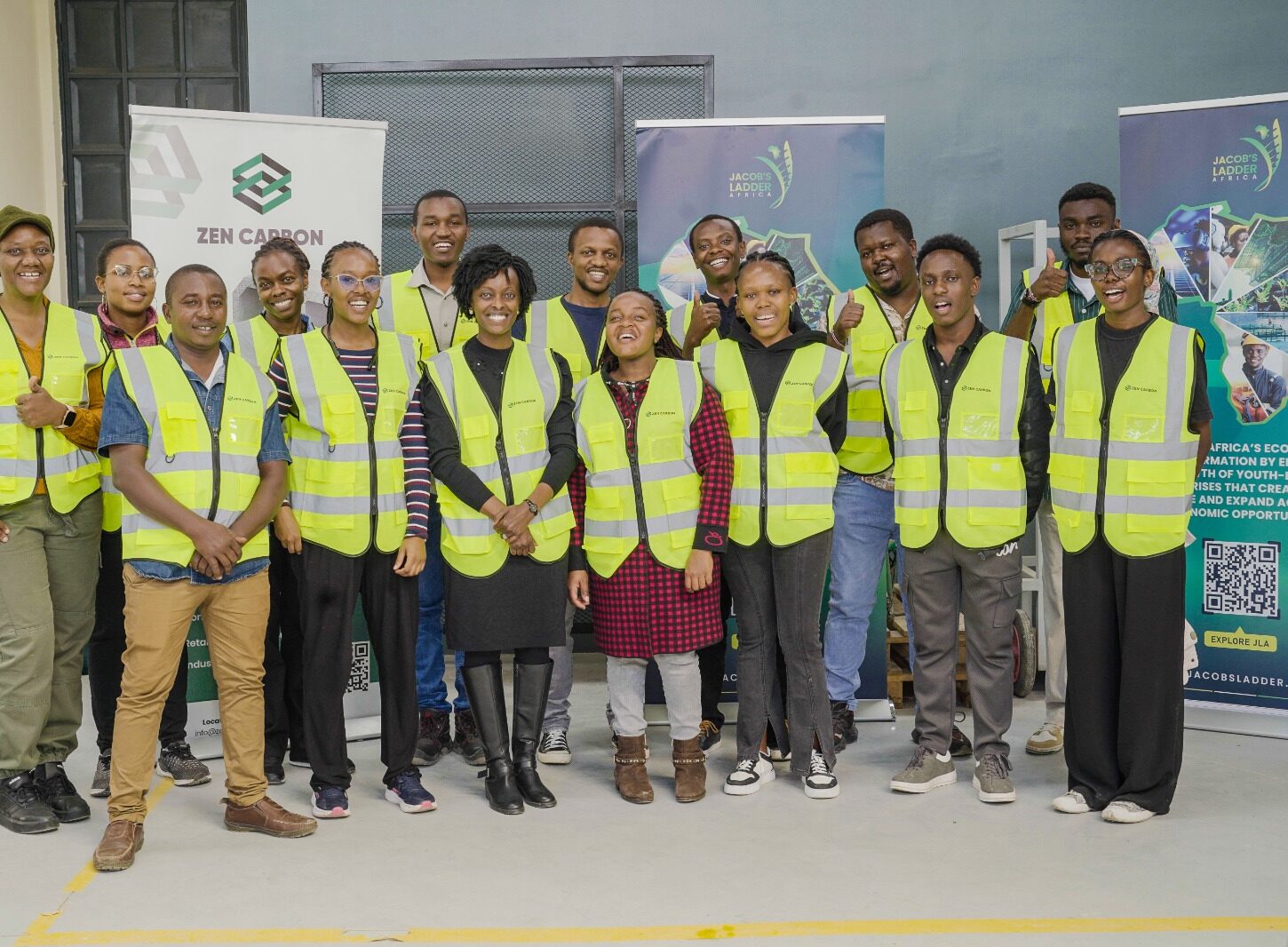
Powering Food Systems Demo Day 2025 Highlight
The first layer is skills ownership: Hands-on, experiential training that doesn’t just teach about green sectors but puts young people inside them, making decisions, solving real problems, failing safely.
The second layer is idea ownership: Prototype funding that says “your concept deserves to exist in the world”, not just in a pitch deck. We fund young founders to build, test, and prove their ideas before the market demands perfection.
The third layer is legal ownership: We support business registration, because a registered business is not a bureaucratic formality. It is the moment a young person’s enterprise becomes real, recognized, and theirs under the law.
And the fourth, perhaps the most radical, layer is community ownership: The push to hire locally. Because a founder who employs her neighbors is not just running a business, but also rebuilding the social contract of her locality.
Each layer compounds the last. Together, they don’t produce job-seekers. They produce builders.
The Playing Field Was Never Level. Technology Changed That
For too long, the geography of innovation has been a closed club. Ideas that scaled were ideas born near capital: Near Silicon Valley’s accelerators, near Berlin’s startup corridors, near London’s fintech ecosystem. A brilliant young founder in Nairobi or Lagos competed not just on merit but against a structural head-start: Better infrastructure, cheaper credit, more mature markets.
Technology is dismantling that advantage in real time. When we embed technology across our portfolio of startups, as an operating philosophy, we are not teaching young entrepreneurs to use tools. We are giving them the same instruments that founders anywhere in the world use to design, communicate, market, and scale. A green agri-tech startup in Kisumu can run its financial model on the same software as a climate-tech firm in Munich. A waste-to-value enterprise in Dar-es-Salaam can reach customers, attract investors, and tell its story with the same digital fluency as any startup in the Global North. Technology, embedded intentionally, is not an add-on to youth enterprise development. It is the mechanism by which African founders stop competing on the continent’s terms and start competing on the world’s.

Our Incubation Management System
You’re Not Donors Here. You’re Co-Owners
The development sector has a language problem. We talk about “beneficiaries.” We celebrate “reach.” We measure “outputs.” And in doing so, we quietly reinforce the most corrosive idea in the aid ecosystem: That young Africans are recipients of opportunity rather than creators of it. We are inviting you into a different posture. When you fund a young founder’s prototype, you are not giving a grant; you are making the first bet on a company that will outlast your funding cycle. When you fund business registration, you are not covering an administrative cost; you are co-signing the legal birth of an enterprise. When you fund local hiring, you are not subsidizing payroll; you are investing in a multiplier that ripples through a community for years.
Philanthropy, at its best, is not charity. It is patient, values-aligned capital that goes where commercial investors won’t, yet. The green economy in Africa is at exactly that inflection point. The enterprises that will define it are being founded right now, by young people who need “co-owners” with resources, not patrons with conditions. The question for every foundation in this space is not, “How much should we give?” It is, “How much of this future do we want to own?”