Africa should never have to choose between development and climate action.
Earlier this year, a new pedestrian walkway quietly opened in Nairobi’s Upper Hill business district. To most people, it looked like any other paved walkway. But beneath every step lay something unusual: captured carbon dioxide permanently mineralized into the concrete itself.
For us at ZEN Carbon, that walkway represented far more than a construction project. It represented a simple but important idea, that the infrastructure Africa is yet to build can become part of the climate solution rather than part of the problem.
Africa is urbanizing faster than any other region in the world. Over the coming decades, we will build millions of homes, schools, hospitals, factories and roads to support a population expected to account for nearly one-quarter of the world’s total by 2050. The real question is what kind of infrastructure we build today and whether it locks us into decades of carbon emissions or becomes the foundation of a more sustainable future.
Like many Kenyans, we grew up in communities where agriculture was more than an economic activity, it was a way of life. Over the years, we watched increasingly unpredictable weather affect harvests, livelihoods and household incomes. Those experiences shaped our belief that Africa should never have to choose between economic development and environmental stewardship. That conviction eventually led us to one of the world’s hardest-to-abate industries: concrete.
Concrete is the backbone of modern development, yet cement production accounts for approximately 8% of global carbon dioxide emissions. At the same time, the United Nations projects Africa’s population will approach 2.5 billion people by 2050, while the African Development Bank estimates the continent requires between US$130 billion and US$170 billion in annual infrastructure investment. These are not just climate statistics, they are development realities. Africa will build. The opportunity lies in building differently.
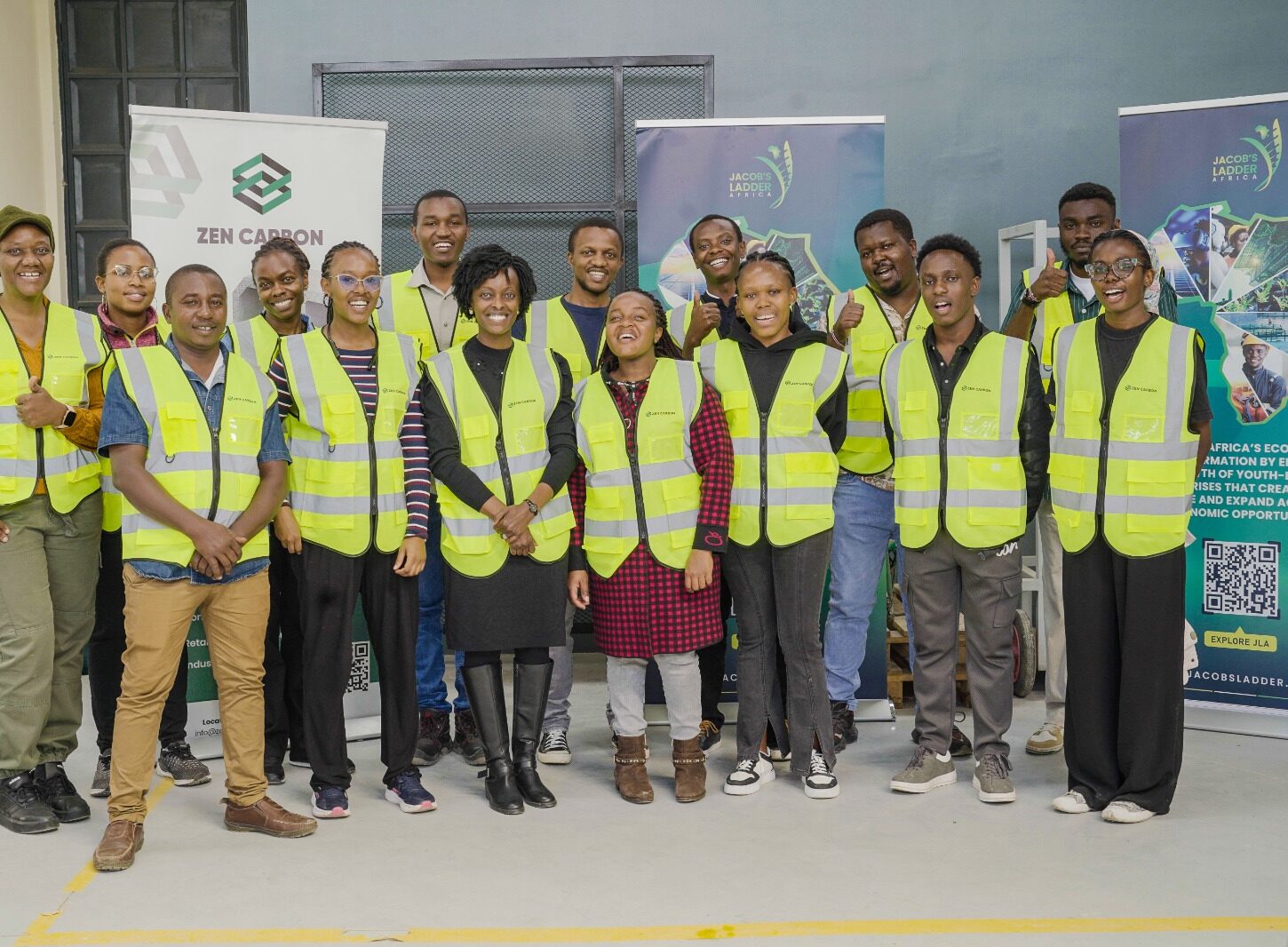
In less than two years, our team has progressed from laboratory experiments to public infrastructure and now to industrial deployment. We have worked alongside researchers, concrete manufacturers, carbon removal companies and government institutions to demonstrate that captured carbon dioxide can be permanently stored in concrete while reducing cement consumption. In the coming weeks, we will deploy our technology at industrial scale in what we expect to be the Global South’s first commercial deployment of concrete mineralization technology at a concrete manufacturing plant. For us, this is not simply a company milestone. It is evidence that world-class climate technologies can be conceived, engineered and commercialized from Kenya.
The biggest lesson from that journey surprised us.
We thought the hardest challenge would be chemistry. We were wrong.
Every conversation with a concrete producer eventually came back to the same questions: Will it reduce costs? Will it maintain product quality? Can it integrate into my existing operations? We realised that climate technologies are not adopted because they reduce emissions. They are adopted because they solve business problems while delivering environmental value. The fastest way to decarbonize industry is to make sustainability commercially attractive.
The greenlabs incubation programme accelerated this shift in our thinking. We entered the programme focused on proving that carbon mineralization worked. We left recognising that successful climate innovation is built around customers as much as technology. It challenged us to think beyond the laboratory and understand policy, finance, standards, partnerships and market creation. In many ways, greenlabs helped us stop thinking like inventors and start thinking like market builders.
The opportunities extend far beyond our own company. Communities can benefit from skilled green jobs, stronger local manufacturing and lower-carbon public infrastructure. Kenya has the opportunity to position itself as a regional leader in low-carbon construction, carbon removal and green industrialisation. Across Africa, where much of tomorrow’s infrastructure has yet to be built, we have a once-in-a-generation opportunity to integrate climate innovation into development from the very beginning rather than retrofit it decades later.
That walkway in Upper Hill will not solve climate change on its own. Neither will one industrial deployment. But every industry begins with a first factory, every movement with a first demonstration, and every new way of building begins with the courage to challenge the old one.
Africa’s greatest climate advantage is that much of its future is still waiting to be built.
Let’s make sure we build it differently.