Africa is entering a decisive period for its agri-food systems. Climate change is reshaping production conditions, technology is changing how food is produced and traded, and investment is opening new possibilities across agricultural value chains. At the same time, millions of young Africans are entering the labour market, many in search of viable economic opportunities. Their participation in this evolving food economy is essential. The more consequential question, however, is whether young people will have the influence to shape where investment flows, which opportunities are created and how the future of Africa’s agri-food systems is determined.
Africa has no shortage of youth-focused strategies, programmes or platforms. The African Union and FAO have already developed investment guidelines that call for young people to be engaged throughout the investment programme cycle, while the FAO’s 2025 Status of Youth in Agri-food Systems makes the case for youth participation in transforming food systems. FAO investment guidelines for youth in agrifood systems FAO’s Status of Youth in Agrifood Systems
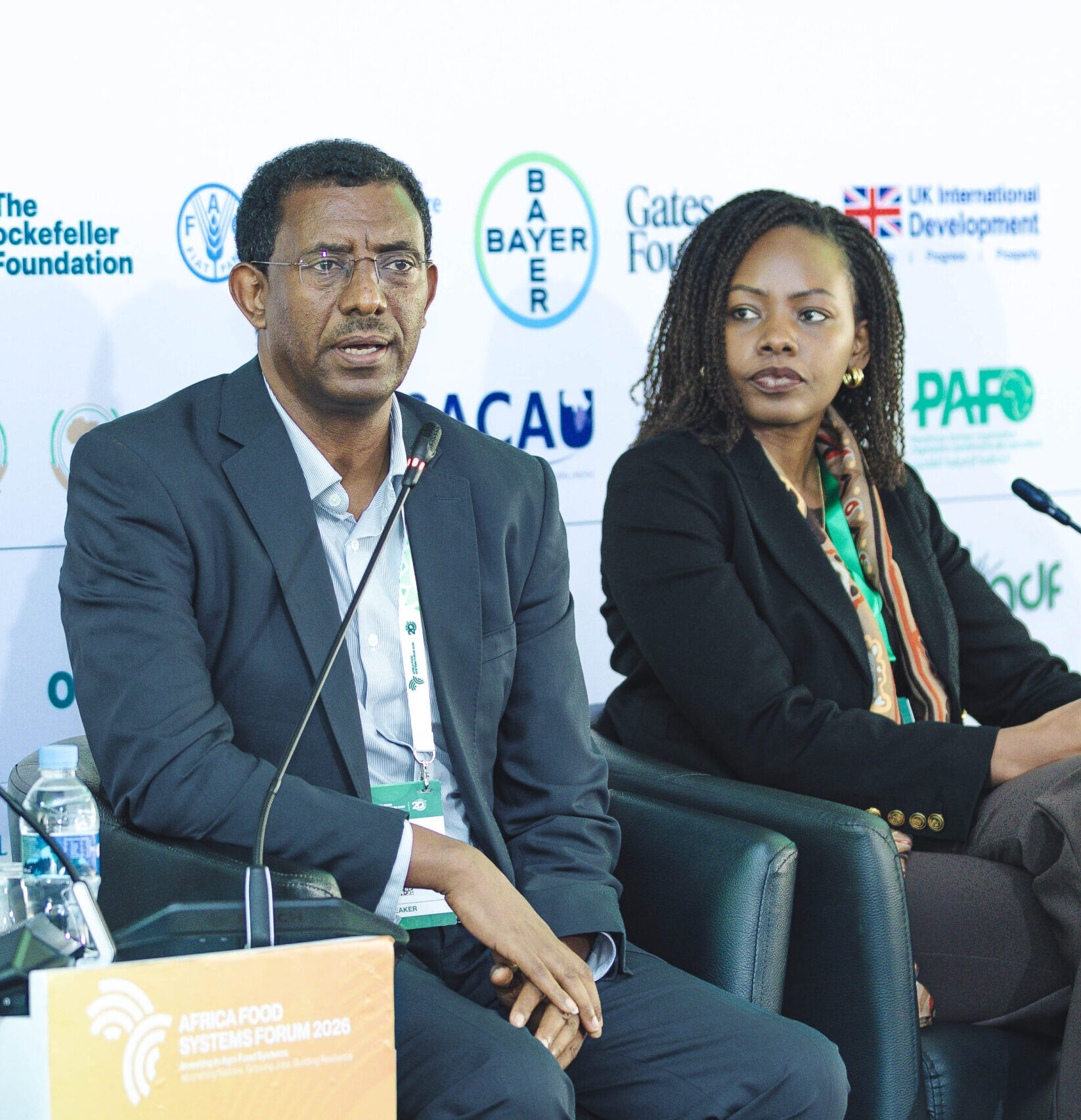
Yet there is a persistent gap between being included in a system and having the power to shape it. The Africa Food Systems Forum 2026 put that question directly on the agenda in its session on consolidating African youth climate action in agrifood systems, in which Jacob’s Ladder Africa (JLA) Co-Founder and CEO Sellah Bogonko, was a panelist. Its premise was that, as Africa prepares for COP31 and COP32, continental frameworks, youth movements, advocacy efforts and investment pipelines need to be better aligned. That is more than a call for greater youth participation. It raises a harder institutional question: what changes when young people are connected to the decisions, capital and implementation mechanisms that determine the future of agri-food systems?
The answer cannot simply be more seats at more tables. Young people need influence at the points where systems are designed and resources are allocated. That means shaping investment priorities, contributing to policy design, influencing climate and agricultural finance, participating in implementation, and having credible routes through which their enterprises, innovations and evidence can inform what governments and investors do next.
There is a reason this matters beyond questions of representation. Africa’s employment challenge is already forcing a rethink of how economic opportunity is created. The World Bank estimates that around 10–12 million young people enter Africa’s labour force each year, while the continent currently creates approximately 3 million formal jobs annually. It also notes that many young Africans will continue to create livelihoods through agriculture, small enterprises and informal work rather than enter formal wage employment. World Bank, Building Skills, Creating Jobs, and Empowering Africa’s Future
This makes the design of agri-food systems an economic question as much as a food or climate question. Young people are already building businesses and developing solutions across agriculture and food systems. Recent initiatives illustrate both the opportunity and the problem. Zimbabwe’s 2026 Youth in Agri-food Systems Investment Plan, for example, identifies barriers including access to finance, markets, technology, productive assets and skills, while directing investment towards youth-led agribusinesses, value addition, climate-smart agriculture and digital technologies. FAO, Zimbabwe Youth in Agri-food Systems Investment Plan
Kenya provides another indication of the gap. A June 2026 youth–parliamentary retreat on agri-food systems concluded that the policy door for youth had opened, but that the urgent task was to finance, implement and measure the pathways that turn youth participation into jobs, enterprise growth and resilience. AGRA, Youth–Parliamentary Retreat on Kenya’s Agrifood Systems
The lesson is important. The constraint is not simply a lack of youth ambition or even a lack of youth-focused policy. It is the distance between youth agency and the systems that can give that agency economic and political consequence. Closing that distance requires a different approach.
First, move youth participation upstream
Young people should be involved before investment priorities are settled, not consulted after programmes have been designed. If a government is deciding which agri-food value chains will receive public investment, if a development finance institution is developing a climate-finance facility, or if a donor is designing an entrepreneurship programme, young people with experience in those systems should be involved in defining the problem and shaping the response. That means moving from consultation to co-design.
FAO’s policy work already points in this direction, calling for youth engagement in the design, implementation and monitoring of transformative agri-food policies. FAO, Seen, heard and equipped: pathways to youth inclusion in agrifood policymaking
Second, connect youth platforms to investment pipelines
A youth platform that produces recommendations but has no connection to capital allocation has limited ability to change economic outcomes. The same is true of investment pipelines that identify promising sectors without mechanisms for identifying and incorporating youth-led enterprises and solutions. The two need to be connected. This requires investors and development partners to make youth participation part of the architecture of investment, rather than treating it as an inclusion criterion added to an otherwise unchanged investment model.
Third, measure influence, not attendance
Africa should become much more demanding about what it means to say that young people are participating. How many youth proposals influenced policy? How much capital reached youth-led enterprises? How many investment decisions were changed as a result of youth evidence? How many youth-led solutions moved from pilot to adoption? How many young people participated in decisions over implementation, rather than simply in consultations? The answers to these questions are what need to be tracked and measured and not the number of young people invited to an event.
Fourth, build mechanisms that connect youth action across borders and institutions
The fragmentation identified at AFSF 2026 is not unique to agri-food. Youth movements, government processes, investment institutions, skills systems and advocacy networks often operate on different timelines and through different structures. That is precisely why continental coordination matters.
The emerging Alliance for Greening Skills and Opportunities Africa (AGSO-Africa) offers one example of the kind of architecture required in the wider green transition. Building from the GreenWorks 4 Africa outcomes, AGSO-Africa is advancing as a pan-African coalition to convene stakeholders, build a common evidence base and carry a shared green skills and jobs position through the processes towards COP32 and beyond.
Its relevance is not that every youth or agri-food initiative should sit inside one platform. It is that Africa, among other things, needs stronger mechanisms for connecting evidence, youth action, policy, investment and implementation rather than continuing to build parallel efforts.
If young people are helping determine which problems receive investment, which innovations are scaled, which policies are prioritised and how implementation is measured, then their involvement is changing the system. If they are consulted but the underlying decisions remain unchanged, Africa has achieved participation without influence.
As the continent looks towards COP31 and COP32, that distinction should matter. Africa does not need another generation of youth engagement commitments that sit separately from the machinery of policy and investment.
It needs to build the machinery differently. Young Africans should not simply be prepared for the agri-food systems Africa intends to build. They should have a meaningful role in deciding what those systems become.