Africa’s green transition is no longer a question of whether new jobs and economic opportunities will emerge. The opportunity is substantial. The International Labour Organization projects that green-transition investments could generate 37.2 million additional jobs globally by 2030 compared with business as usual, including 5.8 million additional jobs for young people. Yet the opportunity is not being distributed evenly. In renewable energy alone, Africa accounted for just 324,000 of the 16.2 million jobs worldwide in 2023, according to the IRENA-ILO Renewable Energy and Jobs Annual Review.
The constraint is therefore not simply the availability of work. It is whether Africa can build the skills, enterprises, investment pathways, labour-market intelligence and enabling policies required to participate in the economic activity being created.
Evidence of that coordination challenge is emerging from African labour markets themselves. A recent analysis of online vacancies across Kenya, Egypt, Morocco and Tunisia found an overall upward trend in demand for green skills between 2022 and 2025, while also showing significant differences between countries and sectors. The research found sustainable energy to be the dominant area of demand, alongside emerging requirements in sustainable mobility, circular economy, climate adaptation and green digital skills.
These trends cut across institutional boundaries. Employers need workers with relevant capabilities. Skills institutions need better signals about changing demand. Governments need evidence to shape policy and qualifications. Investors need viable enterprises and markets. Young people need clearer pathways from skills to economic opportunity.
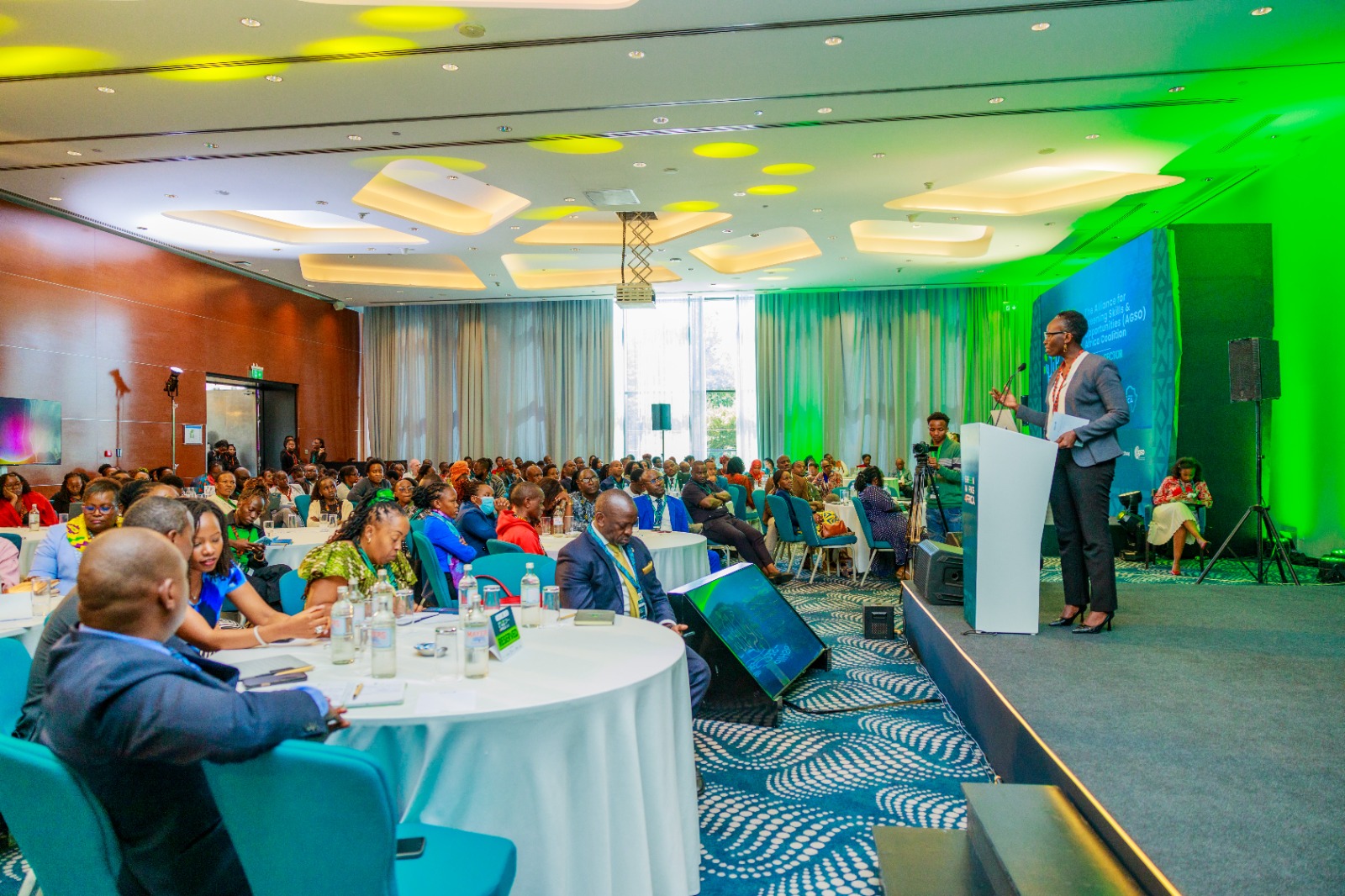
No single institution controls all of these pieces.This is the space for the Alliance for Greening Skills and Opportunities Africa (AGSO-Africa). Building on the work of AGSO-Kenya and advanced through the GreenWorks 4 Africa: Africa Green Skills and Jobs Summit, AGSO-Africa provides a continental mechanism for governments, employers, investors, academia, skills institutions, development partners, entrepreneurs and youth networks to work around a shared green skills and jobs agenda.
Its importance is particularly timely as Africa moves towards COP32 in Addis Ababa in 2027. The GreenWorks 4 Africa Forum positioned AGSO-Africa as a coalition for consolidating commitments and carrying a common African position on green jobs, skills and opportunities into that process.
The objective will not be another platform that produces another set of declarations but instead better alignment between evidence and action: identifying where demand is emerging, connecting skills systems to that demand, strengthening enterprise pathways, mobilising investment and informing policy.
Africa cannot build a green workforce through disconnected interventions. AGSO-Africa is an invitation to build the connections. Organisations working on green skills, employment, enterprise development, investment, policy, education, research or youth opportunity are invited to join the Alliance and contribute to shaping a coordinated African agenda for green skills and jobs.